Concrete Contractors in College Station, TX

What Concrete Work Do College Station Property Owners Need Most?
Five categories cover nearly every job
concrete contractors take on in College Station. Concrete driveways, including replacements, widenings, and extra parking pads. Concrete patios, from plain broom finished slabs to stamped and colored work. Concrete sidewalks and walkways, both private paths and the public
sidewalk running across a front yard. Concrete foundations, slabs, and repairs, which takes in shop slabs, shed and RV pads, room addition slabs, crack repair, and section replacement.
Asphalt paving for the large areas where it makes more sense than concrete. Who calls for what splits by property type. Owner occupied homes in older neighborhoods off Texas Avenue usually need replacement of original 1970s and 1980s flatwork. Rental houses near campus need parking capacity and safe walking surfaces. Newer builds out toward Greens Prairie and Castlegate tend to need patios, extensions, and slabs the builder never poured.
What Goes Into a New Concrete Driveway in College Station, TX?
A
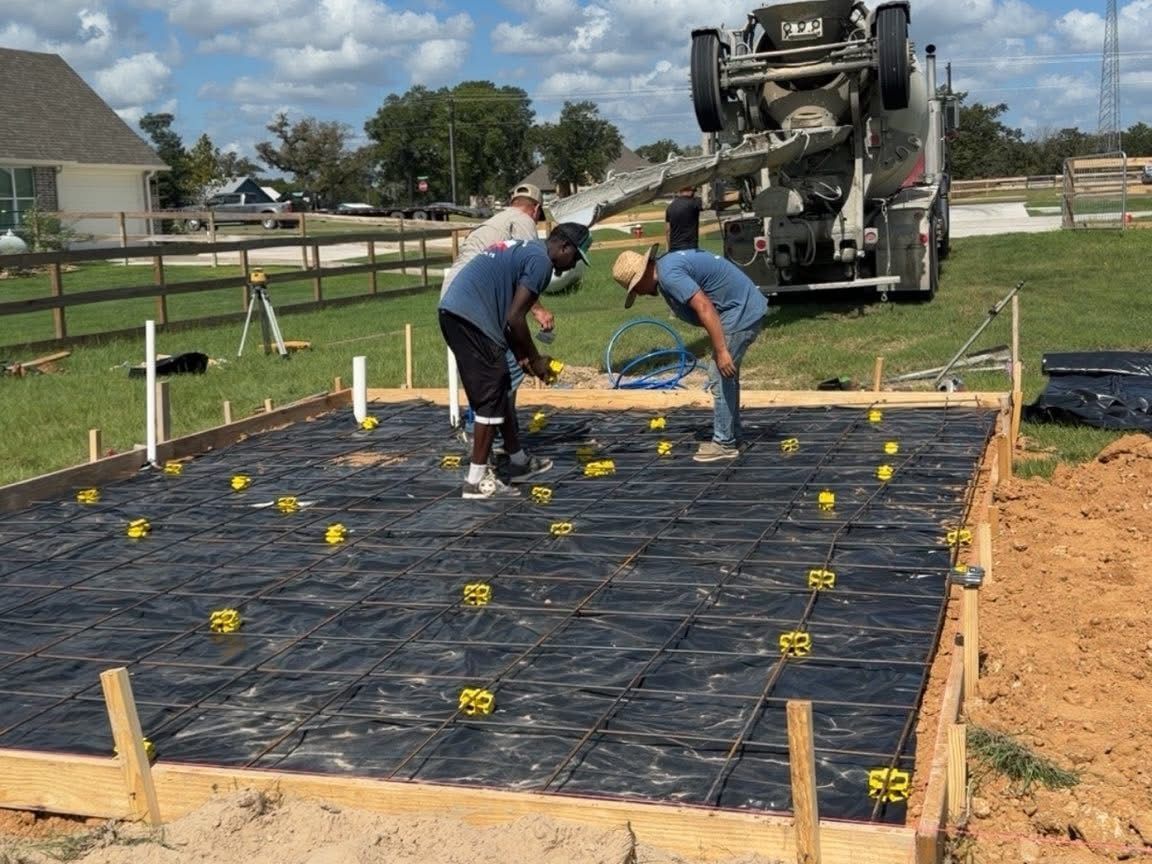
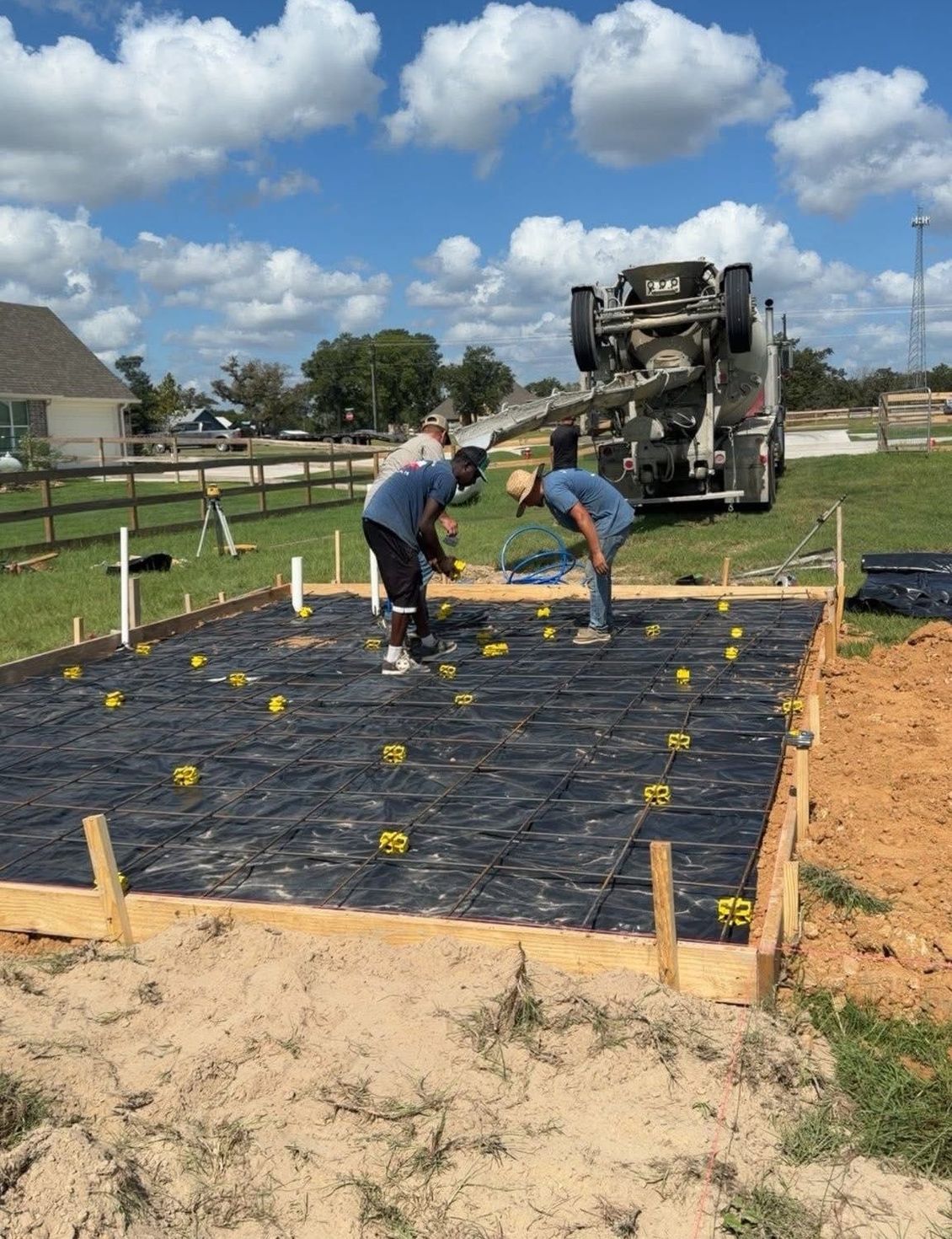
concrete driveway in College Station is built in a fixed sequence, and skipping any step in it is where cheap bids find their savings. The old surface comes out and gets hauled off. The subgrade is excavated to depth and graded so water runs away from the garage and the house instead of toward them. An aggregate base goes in and gets compacted in lifts, not dumped and raked. Forms are set and braced so they hold their line against the weight of wet concrete. Rebar or wire mesh is tied and supported on chairs so it sits in the middle of the slab rather than on the dirt. Then the pour, the finish, and control joints cut at the right depth and spacing. Thickness is set by load. A driveway that parks passenger cars is not built the same as one holding a dually, a trailer, or a loaded RV.
Concrete is not a purchase most people make twice, and nothing about it gets easier to fix after it cures. A slab poured on a base that was rushed does not settle into place, it keeps moving, and it does it right out front where every visitor sees it. Hire someone who pours in Brazos County clay every week, who will tell you when a repair will hold, and who will still be around when you want a patio to match the driveway. Call or send the form and we will come look at it.
Do You Need a Permit for Concrete Work in College Station, TX?
Often, yes, and it catches people off guard. The City of College Station requires a permit to build or modify a drive approach or any curb cut in the right of way, which is the section where your driveway meets the street. Even when the work stays entirely on private property and never touches the approach, a permit is still required once the added paving exceeds 120 square feet. Residential driveway permits are submitted through the city eTRAKiT portal, and the submittal has to include construction specifications showing concrete depth along with the size and spacing of the reinforcement.
Paving inside the right of way must meet the BCS Design Standards. Separate from the city, many College Station HOAs require architectural review before a driveway extension or a visible patio goes in. Ask the
concrete contractor bidding your job who is submitting the permit and what specs they are submitting.
What Concrete Patio Finishes Hold Up to College Station Heat?
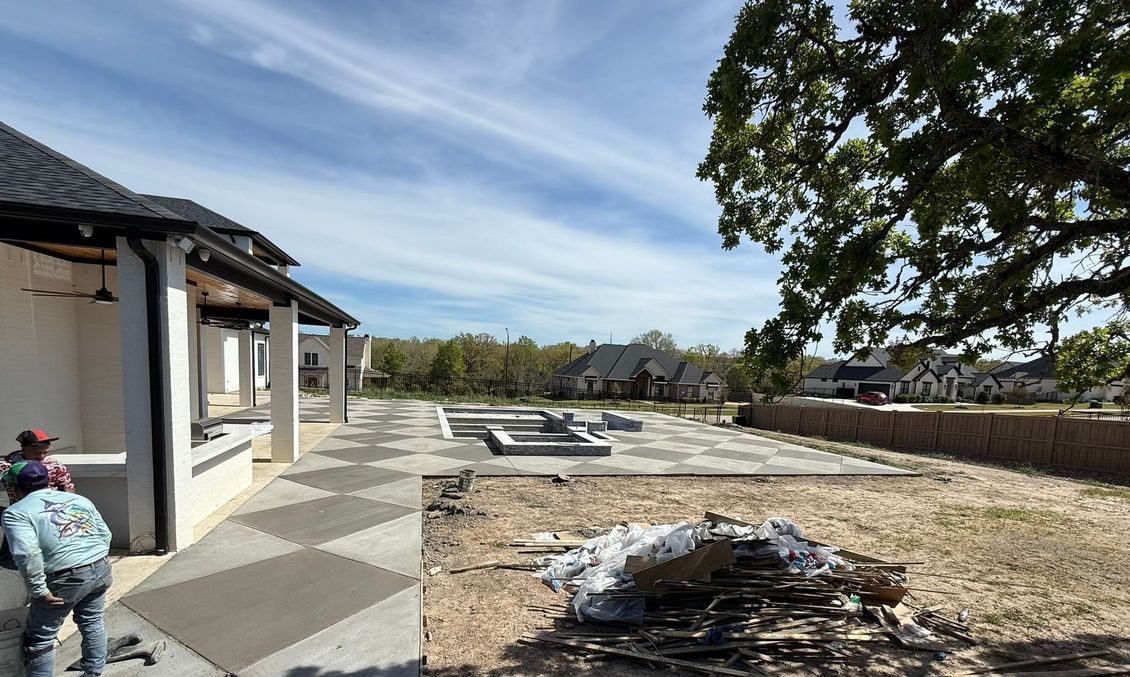
Patio finish in College Station is a comfort decision as much as a looks decision, because the surface spends four months a year in direct sun. Broom finish is the plain workhorse, textured enough for wet feet and the coolest of the options. Exposed aggregate gives a stone look with real grip and hides staining well. With stamped concrete,
concrete contractors press texture mats into fresh concrete for a stone, brick, or tile pattern with no joints for weeds and no individual pavers to shift as the clay moves underneath. Color is where heat comes in, since dark charcoals and deep browns get uncomfortable barefoot in July while lighter tans and grays stay usable. Integral color, meaning pigment mixed into the concrete itself, holds up far better under Texas sun than color applied only to the surface. Any decorative finish needs resealing on a cycle to keep the color from washing out, so ask your
patio contractor what schedule they recommend.
What Concrete Work Do Rental Properties Near Texas A&M Need?
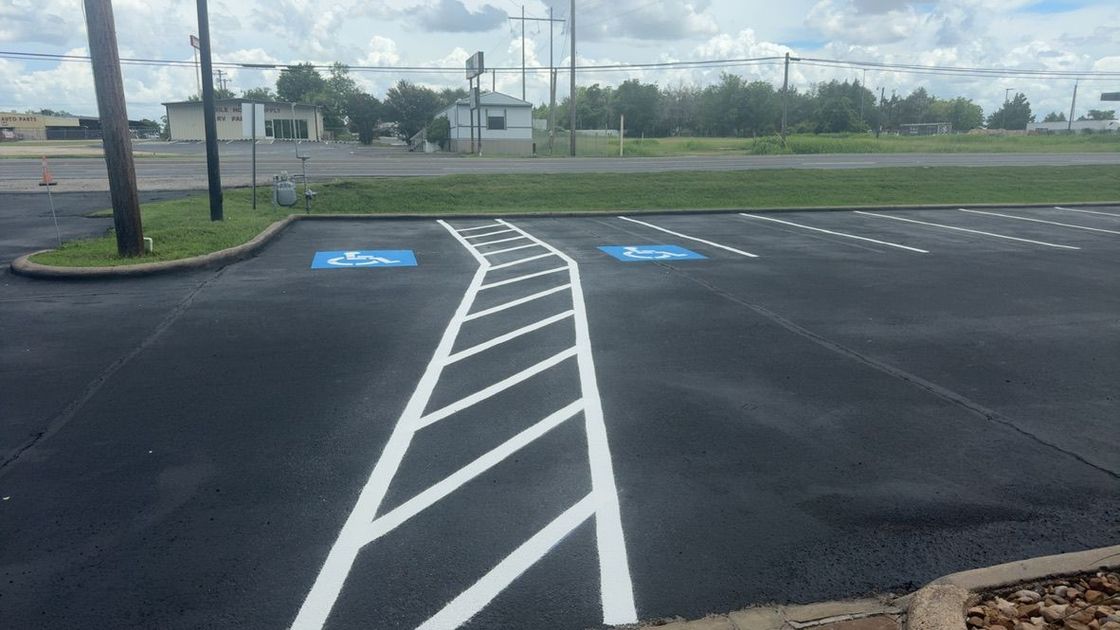
Rental property around Texas A&M takes a different kind of concrete beating than an owner occupied home. Four or five tenants in a three bedroom house means four or five vehicles on a driveway that was poured for two, so the edges break down first where tires run off onto bare dirt. Parking pads and driveway widenings are the common fix, and they need their own compacted base rather than being butted up against the existing slab and hoped for.
Walkways matter too, because a lifted or spalled section on a rental is a trip hazard the property owner carries liability for, not the tenant. Landlords managing several houses in Southside, Eastgate, or the neighborhoods along Holleman usually want the flatwork on all of them assessed together, since the houses were built in the same era and tend to fail in the same way at the same time.
Why Do Newer College Station Subdivisions Have Concrete Problems?
Newer construction in College Station carries a specific problem that older neighborhoods do not, which is engineered fill. Subdivisions built out along Greens Prairie, Castlegate, Creek Meadows, and the Wellborn corridor were graded before the houses went up, and any pad built on imported fill settles for years afterward while the fill consolidates. Concrete poured on it during the building phase goes in on a builder schedule, which usually means minimum thickness, wire mesh instead of rebar, and a base that was compacted quickly. The result is a driveway or patio that looks fine at closing and starts separating at the joints three to six years later. Replacement on these properties has to start by checking what is under the slab, because pouring new concrete onto fill that is still moving produces the same cracks in the same places on a slightly longer timeline.
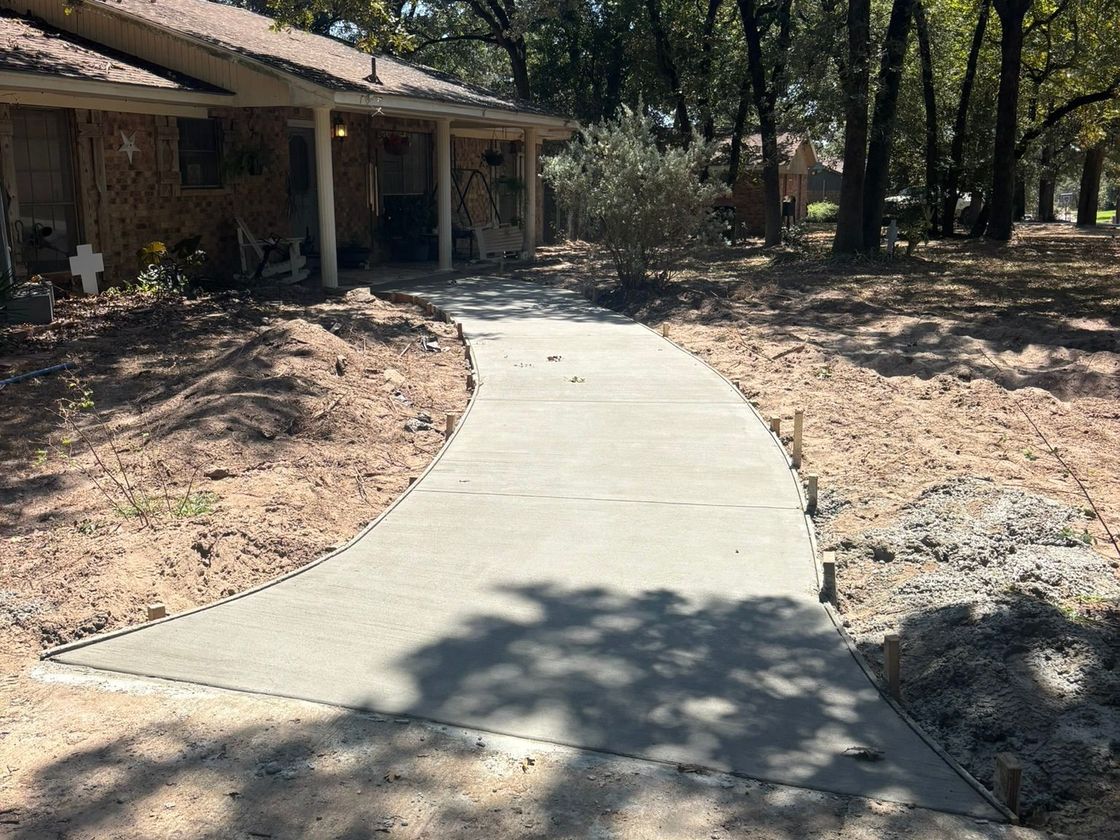
When Does a Sidewalk or Walkway Need Replacing in College Station, TX?
A
sidewalk or walkway in College Station needs replacement when neighboring sections sit at different heights, when a crack runs the full thickness rather than just the surface, or when the top has spalled and is flaking away in sheets. Height differences are the urgent one, since an edge standing proud of the section next to it is what people catch a toe on. Walkways are thin and sit directly on the clay with very little base under them, so they register soil movement earlier than a driveway does and act as an early warning for the rest of the property. Isolated damage is usually handled by cutting out and replacing individual sections rather than the entire run. When most sections along a run have moved, replacing the whole thing and correcting the grade underneath costs less over time than chasing it one square at a time.
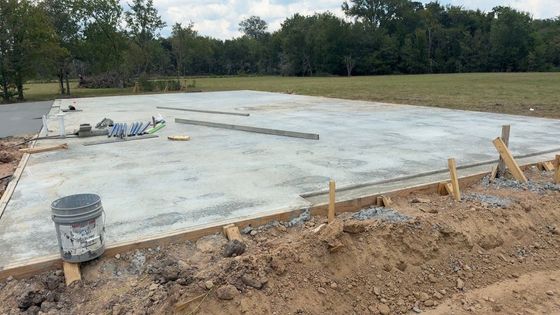
What Do Concrete Slabs and Foundations Cover in College Station, TX?
Slab work in College Station covers garage slabs, shop and barn slabs, equipment and generator pads, shed and RV pads, and the slab portion of a room addition. These are engineered to the weight they carry, so a shop slab that holds a lift and a truck needs more thickness, a deeper compacted base, and heavier reinforcement than a patio of the same square footage.
Repair work covers crack repair, cutting out and replacing failed sections, and resurfacing slabs that are still structurally sound underneath. One distinction matters before you call anyone. Lifting and stabilizing a house
foundation that has shifted is a piering and engineering specialty, and it is a different trade from pouring, repairing, or replacing flatwork and slabs. Anyone quoting both in the same breath is worth a second question.
When Does Asphalt Make More Sense Than Concrete in College Station, TX?
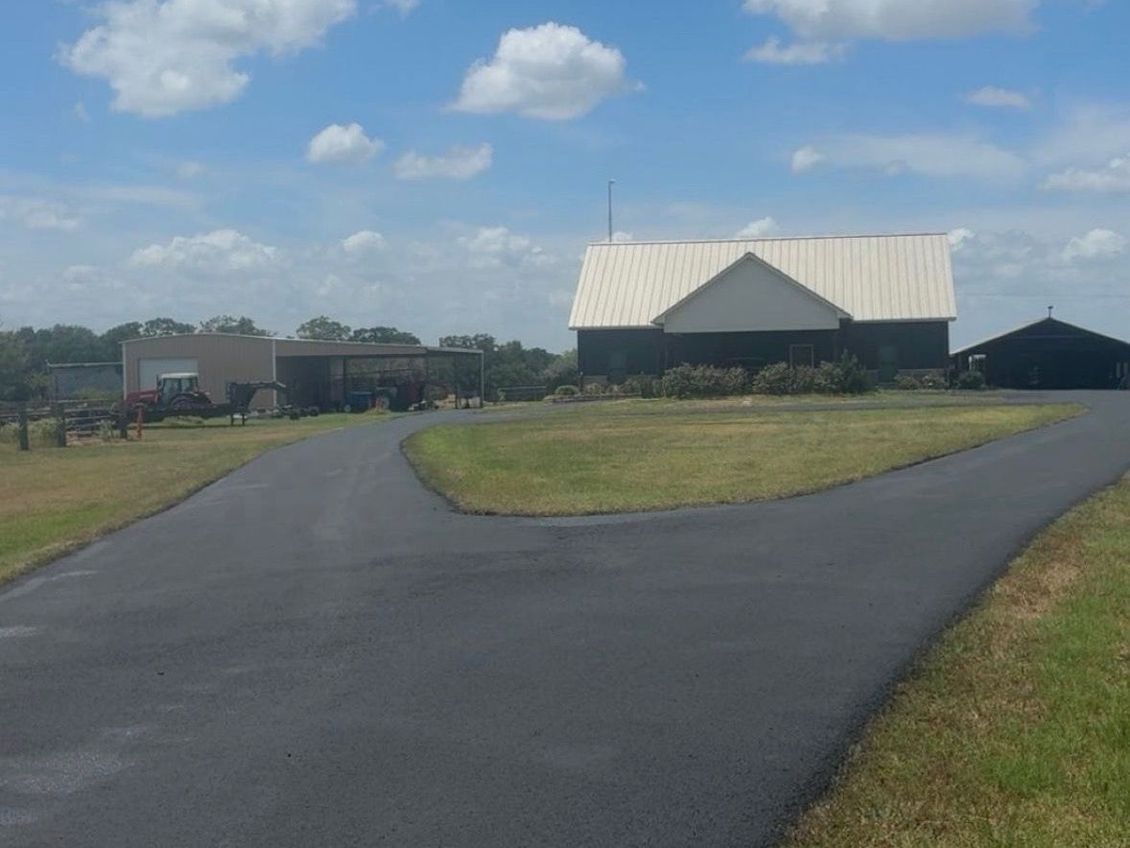
Asphalt paving is the better answer in College Station when the area is large and the budget is per square foot, which usually means apartment and multifamily parking, church lots, private drives on acreage outside the city, and long approaches out toward Wellborn and Millican. Asphalt costs less to install across a big footprint and can be patched in sections as it ages instead of being replaced whole. Concrete wins for most residential driveways here for three reasons. It lasts longer under the same traffic, it does not rut or dent where a heavy vehicle sits parked in summer heat, and it reflects heat instead of soaking it up the way a dark asphalt surface does. The right call comes down to square footage, what parks on it, and how long you plan to own the property.
Concrete Questions College Station, TX Property Owners Ask
What time of year is best for pouring concrete in College Station?
Concrete can be poured year round in College Station, but the conditions change what the crew has to do. Summer heat pulls water out of the surface fast, so hot weather pours mean earlier start times, cooler mix water, and curing measures applied right after finishing. Spring and fall are the easiest windows. The real scheduling constraint here is rain rather than cold, since saturated subgrade has to dry before a base can be compacted properly.
Can new concrete be poured over an existing slab?
Pouring over an existing slab only works in College Station when the slab underneath is stable, level, and still draining correctly, and even then the new layer has to be thick enough to hold together on its own. If the old slab has settled, cracked through, or holds water after a rain, the problem is the base underneath and a new layer will mirror the same cracks within a season or two. The other issue is height. Adding material raises the surface, which can cause trouble at a garage door threshold or where a walkway meets a step.
How long does a concrete driveway last in College Station?
A properly built concrete driveway in College Station commonly lasts 25 to 30 years or more, while one poured thin on an uncompacted base can start failing within five. The gap between those two outcomes is almost entirely base preparation, slab thickness, and reinforcement. Sealing and keeping water from ponding against the edges extends the life of either one.
What is the white chalky film on new concrete?
That white film is efflorescence, which is mineral salt carried to the surface as moisture moves up through curing concrete and evaporates. It is cosmetic, it is common on new College Station pours, and it usually weathers off over several months. It can be removed sooner with a commercial efflorescence cleaner. Repeated efflorescence long after the pour points to water moving through the slab from below, which is a drainage issue rather than a concrete defect.
Does concrete need to be sealed in College Station?
Sealing is optional on a plain broom finished driveway and close to necessary on stamped or colored work in College Station, where UV exposure fades surface color and heavy rain drives water into the surface. Sealer slows water absorption, keeps oil and rust from soaking in, and holds decorative color longer. Resealing happens on a cycle of a few years depending on the product and how much sun and traffic the surface takes.
What Drives the Cost of a Concrete Project in College Station, TX?
Concrete pricing in College Station is built from measurable inputs, not a flat rate. Square footage sets the floor. Thickness and reinforcement move it from there, since rebar costs more than wire mesh and a six inch slab uses half again the material of a four inch one. Tear out and disposal add cost whenever there is existing concrete to break up and haul away. Site conditions matter more than most people expect, including excavation depth, grading, drainage corrections, and whether a mixer truck can reach the pour or the concrete has to be moved by buggy or pump. Finish is the last input, because stamped and colored work carries labor that a broom finish does not. Small pours also cost more per square foot than large ones, since the setup is nearly identical either way.
What Areas Around College Station, TX Do You Serve?
Service covers College Station and the surrounding Brazos Valley, including Bryan, Wellborn, Millican, Navasota, Caldwell, Snook, Hearne, Iola, and Madisonville. Properties inside College Station city limits and out in unincorporated Brazos County are both served, which includes acreage with long driveways, shop slabs, and equipment pads. Residential, rental, HOA common area, and commercial work all fall inside normal scope. If your property sits outside the towns listed and you are still in the Brazos Valley, it is worth a call to check coverage before you assume it is too far.